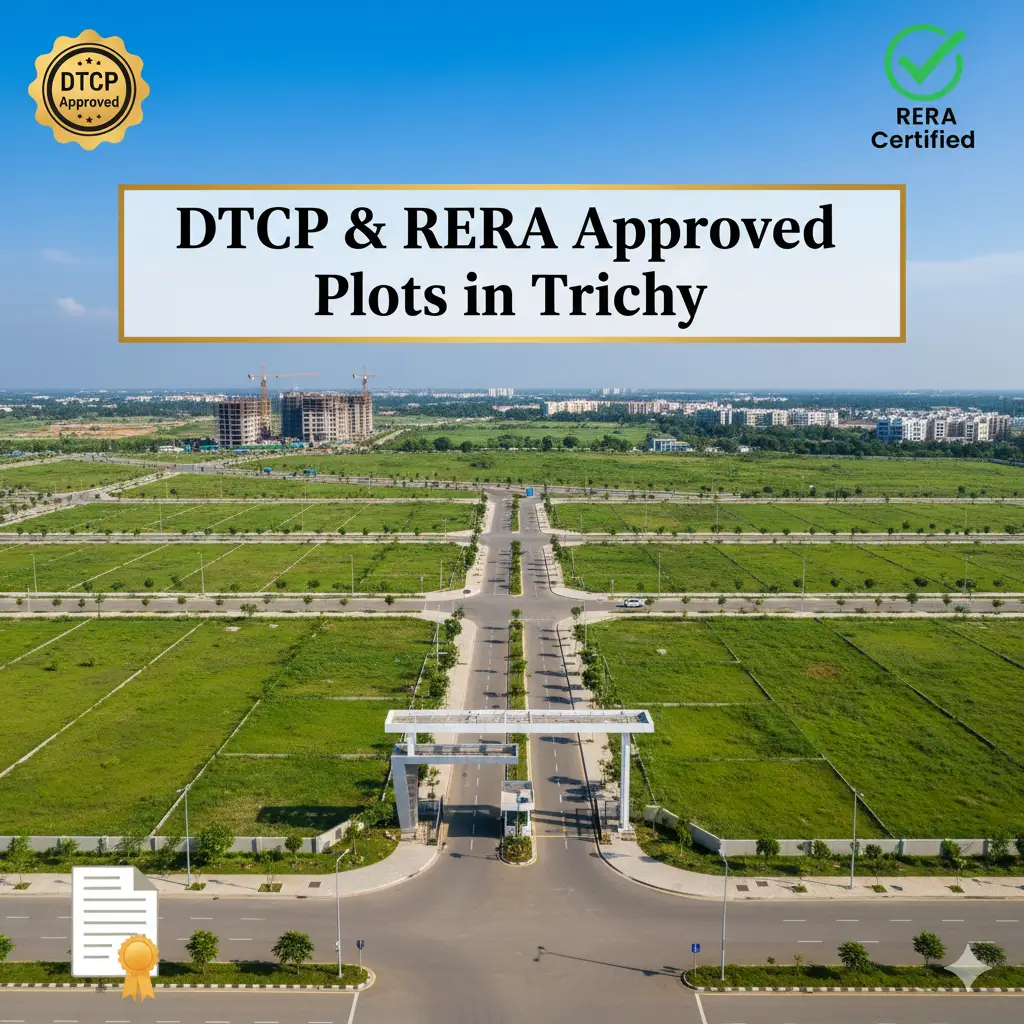
Buying a property is one of the biggest financial decisions a person makes in their lifetime. Whether it is purchasing a plot, an apartment, or investing in real estate for future returns, buyers must ensure that the property they choose is legally safe and compliant with government regulations. In cities like Trichy, where real estate development is rapidly growing, understanding the legal framework behind property transactions is extremely important.
Many buyers focus mainly on location, price, and amenities while ignoring the legal verification process. However, failing to verify approvals such as RERA registration, DTCP approval, and other legal documents can lead to serious problems in the future. Issues such as land disputes, construction delays, illegal layouts, and difficulty in obtaining loans are common when proper checks are not done.
This guide explains the essential legal aspects every property buyer in Trichy must understand before making a purchase. It covers RERA, DTCP approvals, legal documents, due diligence practices, and key verification steps that protect buyers from risks.
Understanding the Real Estate Landscape in Trichy
Trichy has emerged as an attractive real estate destination due to its educational institutions, industrial growth, and improving infrastructure. Areas such as Thillai Nagar, Srirangam, KK Nagar, and areas along the Trichy–Chennai highway are seeing increasing demand for residential plots and apartments.
With growing demand, many developers and layout promoters are launching new projects. While many are legitimate and well-approved, some projects may lack proper approvals or documentation. This is why buyers must carefully evaluate the legal status of the property before investing.
Government regulations such as RERA and DTCP approvals were introduced to improve transparency and protect buyers from fraudulent practices in the real estate sector.
What is RERA and Why It Matters
The Real Estate (Regulation and Development) Act, commonly known as RERA, was introduced in India in 2016 to regulate the real estate industry and protect property buyers.
Under RERA, developers must register their projects with the state RERA authority before advertising or selling units. This regulation ensures transparency, accountability, and protection for buyers.
Key Benefits of RERA for Property Buyers
- Transparency in Project Information
Developers must provide complete project details including land ownership, layout plans, approvals, and completion timelines. - Protection from Project Delays
Builders must deliver projects within the promised timeline. If there are delays, buyers may be eligible for compensation. - Financial Discipline
Developers must deposit 70% of the project funds into a separate escrow account. This ensures the money is used only for construction of that specific project. - Standardized Agreements
RERA ensures that the agreement between the builder and buyer follows a standard format that protects buyer rights. - Access to Verified Project Details
Buyers can verify project registration, status, and legal documents through the Tamil Nadu RERA website.
When RERA Registration is Required
RERA registration is mandatory for:
- Residential and commercial projects larger than 500 square meters
- Projects with more than 8 units
- New apartment or housing developments
However, individual plotted layouts may fall under different approval authorities such as DTCP.
What is DTCP Approval?
DTCP stands for Directorate of Town and Country Planning. It is a government body responsible for regulating land development, layout approvals, and urban planning in Tamil Nadu.
For plotted developments and land layouts outside municipal corporation limits, DTCP approval is essential. This approval ensures that the layout follows proper planning guidelines and infrastructure requirements.
What DTCP Approval Ensures
A DTCP approved layout confirms that:
- The land is legally converted for residential use
- Roads and access pathways are properly planned
- Public utility spaces such as parks and open areas are allocated
- Drainage and infrastructure guidelines are followed
- The layout complies with government town planning regulations
Buying a DTCP approved plot reduces the risk of purchasing land in an unauthorized layout.
Why Buyers Should Avoid Unapproved Layouts
Some developers sell plots in unapproved layouts at lower prices to attract buyers. However, these plots may cause serious problems later.
Common risks include:
- Difficulty in getting bank loans
- Issues with building approvals
- Legal disputes over land classification
- Lack of infrastructure and civic amenities
- Possible demolition notices from authorities
In the long term, investing in a DTCP approved layout provides better security and resale value.
CMDA vs DTCP – Understanding the Difference
While DTCP governs planning in many parts of Tamil Nadu, the Chennai Metropolitan Development Authority (CMDA) handles planning within the Chennai metropolitan region.
Since Trichy is outside the Chennai metropolitan area, most layouts here fall under DTCP approval rather than CMDA.
However, buyers should still confirm whether the property falls under municipal corporation limits, panchayat areas, or special planning authorities, as approval requirements may vary.
Essential Legal Documents Every Buyer Must Verify
Before purchasing any property in Trichy, buyers should verify several important legal documents to ensure the property is free from disputes and legally transferable.
1. Parent Document:
The parent document traces the ownership history of the property over the past several years. It helps confirm that the seller has legitimate ownership rights.
Typically, buyers should verify ownership history for at least 20 to 30 years.
2. Patta:
Patta is a government land record that identifies the rightful owner of a property. It includes details such as:
- Owner name
- Survey number
- Land classification
- Area details
A clear patta in the seller’s name is an important indicator of legal ownership.
3. Encumbrance Certificate (EC)
The Encumbrance Certificate shows whether the property has any legal liabilities such as loans, mortgages, or court cases.
Buyers should obtain an EC for at least the past 20 years to ensure the property is free from financial or legal encumbrances.
4. Land Use Classification
The land must be classified as residential if the buyer plans to build a house.
Agricultural land or land designated for other purposes may require conversion approval before construction.
5. Layout Approval Documents
If purchasing a plot, buyers must verify whether the layout has DTCP approval. The approved layout plan will include:
- Plot numbers
- Road width
- Reserved public spaces
- Approval number and authority seal
6. Building Approval (For Apartments)
For apartment purchases, buyers must verify that the builder has obtained building plan approval from the local authority.
The plan should match the actual construction layout.
Importance of Legal Due Diligence
Legal due diligence is the process of thoroughly verifying the legal status of a property before purchase.
Many buyers skip this step due to lack of awareness or trust in the developer. However, independent verification by a legal professional can prevent major issues later.
Key Due Diligence Steps
- Verify land ownership history
- Check DTCP or RERA approvals
- Confirm land classification
- Review the Encumbrance Certificate
- Validate layout plans
- Ensure there are no ongoing legal disputes
Consulting a property lawyer or legal expert during this process is highly recommended.
Importance of Bank Loan Eligibility as a Safety Check
One practical way to verify a property’s legal status is by checking whether nationalized banks approve loans for that project.
Banks conduct their own legal and technical verification before approving home loans. If major banks are willing to finance a project, it usually indicates that the property has passed several legal checks.
However, this should not replace independent legal verification.
Key Mistakes Property Buyers in Trichy Should Avoid
Many property buyers make mistakes during the purchase process due to lack of legal knowledge.
- Buying Based Only on Price
Extremely low-priced plots may indicate lack of approvals or legal complications.
- Not Verifying Layout Approval
Some buyers assume all layouts are approved without checking official documents.
- Skipping Legal Consultation
A small legal consultation fee can prevent major financial losses later.
- Ignoring Infrastructure Planning
Road access, drainage, and water facilities should also be verified before buying a plot.
- Relying Only on Developer Claims
Buyers should always cross-check documents rather than trusting promotional claims.
How RERA and DTCP Together Protect Buyers
- Both RERA and DTCP serve different but complementary roles in protecting property buyers.
- RERA focuses mainly on regulating developers, ensuring transparency in real estate projects, and protecting buyer rights.
- DTCP ensures proper town planning, infrastructure development, and layout regulation.
- When a project follows both RERA guidelines and DTCP approvals, it significantly reduces the risk involved in property investment.
Final Thoughts
Buying property in Trichy can be a rewarding investment if done with proper research and legal verification. As the city continues to expand, many new projects are entering the market. While this creates opportunities for buyers, it also increases the need for careful due diligence.
Understanding RERA regulations, verifying DTCP approvals, and checking essential legal documents are critical steps in protecting your investment. Buyers should never rush into a purchase without reviewing the legal status of the property.
Taking the time to verify approvals, consult legal experts, and confirm documentation can ensure that your property purchase is safe, secure, and legally sound.
A well-informed buyer is always better protected against risks and can invest in real estate with greater confidence.
What is RERA and why is it important for property buyers?
RERA is a government regulation that ensures transparency and accountability in the real estate sector. It protects buyers by requiring developers to register projects, disclose project details, and follow strict delivery timelines.
Is DTCP approval necessary for buying a plot in Trichy?
Yes. DTCP approval is essential for plotted developments outside municipal limits. It ensures that the layout follows proper planning regulations and infrastructure standards.
Can I get a bank loan for an unapproved layout?
Most banks do not provide loans for unapproved layouts. This is why buyers should always verify whether the plot has DTCP approval.
What is an Encumbrance Certificate?
An Encumbrance Certificate is a document that shows whether the property has any loans, mortgages, or legal disputes associated with it.
How many years of property documents should be verified?
Experts generally recommend verifying at least 20 to 30 years of ownership history through parent documents and legal records.
Is Patta mandatory for property purchase?
Yes. Patta is an important land record that confirms ownership details and land classification. Buyers should ensure the property has a clear patta.