Trichy (Tiruchirappalli) is emerging as one of Tamil Nadu’s most promising real estate destinations for Non-Resident Indians (NRIs). Known for its strong educational base, growing infrastructure, and balanced lifestyle, the city offers affordable yet high-potential property investment opportunities compared to metropolitan cities.
For NRIs, investing in Trichy is not just about owning property; it is about long-term wealth creation, rental income, and securing a home in their native region. However, successful investment requires understanding local market dynamics, repatriation regulations, and legal frameworks. This guide provides a comprehensive overview for NRIs planning to buy or invest in property in Trichy.
Why Trichy Attracts NRI Property Investors
Trichy combines cultural heritage with modern development. It is home to major educational institutions, industrial zones, healthcare facilities, and transport connectivity through road, rail, and air.
Key reasons NRIs consider Trichy for property investment include:
• Lower property prices compared to Chennai and Coimbatore
• Stable demand for residential housing
• High rental potential near colleges and hospitals
• Growing IT and manufacturing presence
• Strong emotional and family connection for overseas Indians
• Availability of plotted developments and apartments
These factors make Trichy a safe and long-term investment destination for NRIs.
Popular Locations in Trichy for NRI Investment
NRIs typically prefer areas that show growth potential and rental demand. Some preferred locations include:
- Panagudi and Panjapur
These areas are emerging residential and industrial hubs with planned infrastructure. - Thiruverumbur
Close to BHEL and industrial corridors, making it attractive for working professionals. - Srirangam
Offers cultural value and residential stability with moderate appreciation. - Kattur and KK Nagar
Established localities with schools, hospitals, and transport connectivity. - Airport Road and Trichy–Madurai Highway
High appreciation potential due to future infrastructure development.
Choosing the right location is critical for both resale value and rental yield.
Types of Properties Suitable for NRIs
NRIs investing in Trichy generally consider the following property types:
- Residential plots
Ideal for long-term appreciation and future construction. - Apartments
Suitable for rental income and immediate possession. - Villas
Preferred by families planning to settle in India later. - Commercial spaces
Good for rental yield but require higher management.
For first-time NRI investors, residential properties are usually safer due to easier legal verification and resale demand.
Investment Strategy for NRIs in Trichy
NRIs should approach real estate investment in Trichy strategically rather than emotionally.
- Long-term holding
Trichy’s real estate market grows steadily. Holding property for five to ten years can generate significant appreciation. - Rental income focus
Buying near colleges, hospitals, or industries ensures consistent tenant demand. - Phased investment
Instead of putting all funds into one property, consider investing in multiple plots or a combination of plot and apartment. - Builder credibility
Always choose reputed builders or approved layouts to avoid legal issues. - Future infrastructure tracking
Monitor upcoming projects like highways, industrial parks, and transport corridors.
A disciplined strategy minimizes risk and improves return potential.
RBI Rules for NRI Property Investment in India
NRIs are allowed to purchase residential and commercial properties in India without prior RBI permission. However, there are restrictions:
NRIs cannot purchase agricultural land, plantation property, or farmhouses
Properties must be purchased using funds from NRE, NRO, or FCNR accounts
Payment must be made through banking channels only
Joint ownership with resident Indians is permitted. Proper documentation is essential to avoid complications.
Repatriation of Sale Proceeds
Repatriation refers to transferring money from India to your foreign country of residence after selling property.
Key points NRIs must know:
- Up to two residential properties can be repatriated
- Maximum repatriation limit is USD 1 million per financial year
- Repatriation is allowed only for property purchased using foreign inward remittance or NRE account funds
- Capital gains tax must be paid before repatriation
Proper proof of inward remittance and purchase source is required for smooth repatriation.
Tax Implications for NRIs Investing in Trichy
NRIs are subject to Indian tax laws on property transactions.
Rental income
- Taxable in India under
- Income Tax Act
- TDS may apply if tenant pays rent exceeding prescribed limits
Capital gains
- Short-term capital gains if sold within two years
- Long-term capital gains if sold after two years
- Long-term gains are taxed at lower rates with indexation benefits
TDS on sale
- Buyer must deduct TDS when purchasing property from an NRI
Understanding tax planning and double taxation avoidance agreements is important to maximize returns.
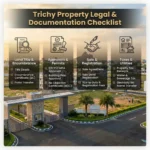
Legal Due Diligence Before Buying Property
Legal verification is the most critical step for NRIs.
Checklist includes:
- Clear title deed
- Approved layout and building plan
- No litigation or encumbrance
- RERA registration
- Completion certificate or occupancy certificate
- Patta and land classification
NRIs should appoint a trusted legal professional or property consultant in Trichy to verify documents.
Power of Attorney for NRIs
Since NRIs may not be physically present, they can appoint a trusted person through Power of Attorney (POA) to manage:
- Property registration
- Utility connections
- Rental agreements
- Maintenance
POA must be notarized and attested by Indian embassy or consulate
Risks and Challenges for NRI Investors
Common challenges include:
- Fraud or fake documents
- Overpriced properties
- Project delays
- Lack of property management
- Tax compliance
- complexity
These risks can be minimized through professional guidance and proper verification.
Future Outlook of Trichy Real Estate
Trichy’s real estate market is expected to grow steadily due to:
- Industrial expansion
- Infrastructure development
- Educational institutions
- Urban population growth
NRIs investing today benefit from early entry into developing zones with future appreciation.
Conclusion
Trichy offers NRIs a balanced real estate investment opportunity with affordability, growth potential, and cultural connection. However, success depends on proper planning, legal verification, and compliance with RBI and tax regulations.
By adopting a structured investment strategy, understanding repatriation rules, and seeking professional support, NRIs can confidently invest in Trichy’s real estate market while safeguarding their capital and ensuring future financial security.
Can NRIs buy property in Trichy without coming to India?
Yes. NRIs can buy property through Power of Attorney while staying abroad.
Is it safe for NRIs to invest in Trichy real estate?
Can NRIs repatriate rental income?
What is the best property type for NRIs in Trichy?
Residential plots and apartments near institutions and industries are ideal.
Do NRIs need RBI permission to buy property?
No permission is required for residential or commercial properties.